


Intro:
For years, skilled trades careers such as construction, automotive technology, welding, HVAC, plumbing, and electrical work have been perceived as male-centric professions. That narrative is changing.
With technician shortages, a retiring workforce, and expensive college tuition accompanied by high student loan debt, more women are recognizing the benefits of working in skilled trades. These careers offer shorter training, competitive salaries, and job security without the weight of debt associated with a college degree.
Can women succeed in skilled trade professions?
The answer is yes! Women are actively reshaping the industry and growing in numbers in an industry that desperately needs, forgive our phrasing, manpower. Opportunities for women in skilled trades have never been better.
Let’s explore common myths, stereotypes, challenges, and opportunities that women have in skilled trades.
Myths:
“Skilled Trades are Men’s Jobs”
This first myth has been lingering in our culture for far too long and is rapidly becoming a thing of the past. In the last few years, women in skilled trades have risen faster than ever. For example, according to CNBC, the number of women entering the skilled trades workforce has increased by nearly a third in the last two decades. See the chart below:
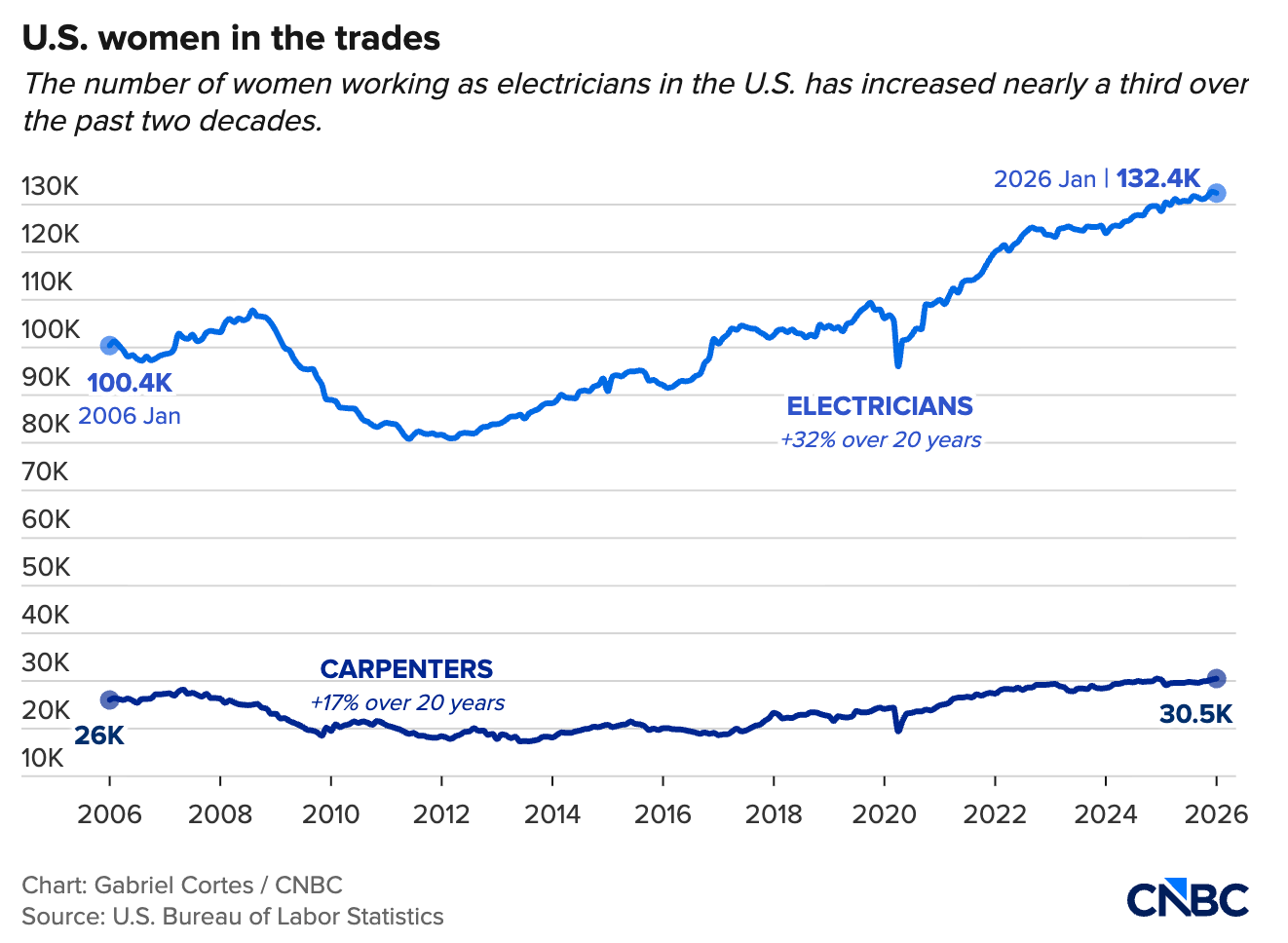
These trailblazers are demonstrating that it is not only possible to be in the skilled trades, but they also prove that anyone willing to seek proper training and put in the effort to learn a new skill can.
“Women Aren’t Strong Enough to Work in Trades.”
Modern technicians must diagnose software and troubleshoot complex systems as well as use wrenches. There is more to working in trades than brute strength. For example, if you’re thinking, “I’m too small to work in skilled trades”, ladders and lifts are commonly used on sites, which eliminates this disadvantage.
Plus, the myth that women aren’t strong enough is obsolete since technology has changed the game. Manufacturing employs robotics for precision, drones are utilized on construction sites, and even handheld tools have been upgraded with lasers for carpentry and plumbing to provide more accurate measurements.
“Women Don’t Like to Get Their Hands Dirty”
This myth needs to be course-corrected. It may stem from the outdated idea that women only care about how they look and therefore wouldn’t want to get their hands dirty. Yet we see plenty of female doctors, nurses, chefs, veterinarians, and cleaning crews, among others. All of these roles deal with what many people could consider dirty or unsanitary situations, yet they are filled with women in the workforce. The same logic could be applied to skilled trades.
Regardless of gender, everyone wants to take pride in their work. Skilled trades offer this in abundance: to see something broken or in need of repair be fixed through problem-solving, technology, and hard work.
Truths about Women in Skilled Trades
Competitive Pay
Many have heard that women, on average, get paid less than men. According to Pew Research, women get paid around 85% of what men earn. However, this number is higher in some skilled trades positions. For example, according to Forbes Magazine, women in construction earn 95% of what men make. This could lead to more long-term earning potential for women throughout their careers.
The Number of Women in Trades is Growing
As mentioned previously, more women are seeking training and applying for positions in trades. The numbers are growing rapidly and are desperately needed since there is a technician shortage occurring in the industry. For example, according to a TechForce Foundation report, there is a 42% gap between new technician graduates and open positions. These positions need to be filled urgently, and women can help bridge that gap.
The Hourglass Foundation aims to encourage more women to pursue successful and fulfilling careers in skilled trades. In fact, the foundation offers scholarships specifically for women seeking vocational training.
Job Security
There has never been a better time to learn a skilled trade. With a technician shortage, baby boomers retiring, and college tuition and debt steadily rising, entering the trades workforce can better ensure job security.
Fortune Magazine reports that 2.1 million skilled trades jobs will be vacant by 2030. This leaves a huge market of untapped potential as well as firm job security. Not only are skilled trades desperately needed, but they will also be in high demand for years to come as more baby boomers exit the workforce.
Challenges Women Face In Skilled Trades
With all the positives, to fully understand the impact of what women would face working in skilled trades, the cons and challenges women face need to be addressed. These are factors that the Hourglass Foundation is hoping to help change through education, awareness and training, but in the present, women should be aware of these potential barriers to understand the full scope of the industry.
Limited Representation
As more women are entering the field, it should be noted that women make up only 5% of the skilled trades workforce. As mentioned earlier, these low numbers are most likely due to the stereotypes of construction, technician, plumber, etc., positions being men's work. Some people still believe women are not tough enough to fill these roles.
The good news, as the chart above mentions, women in skilled trades have grown by a third in the last twenty years. Additionally, thanks to social forums, more women are discussing these issues and joining forces to make the field a better place to work. For example, there is a Reddit group dedicated to women in blue-collar positions that has over 18k active weekly visitors, as well as Facebook groups such as Women of Trades with 25k members! These are signs that the industry is changing and women are willing and ready to support other women entering the field.
Lack of Awareness
While we have seen more women entering the trades over the past two decades, there is still much work to be done. Educating women about the available opportunities is an important step in the right direction. As part of their overall vision, The Hourglass Foundation is encouraging more women to enter automotive technology and other skilled arenas. The more women see other women in these roles, the more likely they are to consider those roles for themselves. That is why we currently offer two scholarships specifically for women.
Workplace culture concerns
A major concern for many women is working in an industry that is majority male. Some women may find themselves as the only female in training or on the team, which can feel intimidating.
The good news is that many employers are striving to create a more inclusive workplace and attract more women to create a wider net of talent. The labor shortage is a working issue the industry faces, and companies are recognizing the value that women have to offer.
While the industry still has room for improvement, as more women enter skilled trades, it will create a more supportive and positive environment for the future workforce.
Why More Women are Needed in Skilled Trades Positions
Women should consider entering skilled trades for a variety of reasons. Firstly, there are vacancies in skilled trades because 20-30% of tradespeople will be retiring in the next several years, leaving a huge gap in the number of people exiting the industry vs entering. These roles are in high demand, with communities desperately seeking to fill these jobs. Because of the demand, this can lead to quality jobs and career advancement. Also, skilled trades offer a chance to take pride in your work, especially when you can see the results from start to finish.
Secondly, during a time when many people are concerned about the future of the economy and having a college degree does not guarantee a steady job, skilled trades are becoming a popular career route. Training takes around two years vs pursuing a four-year college degree. With expensive college tuition and high student loan debt, skilled trades programs may be a more affordable option and help individuals enter the workforce more quickly than their peers.
How Women Can Launch a Skilled Trades Career
Training programs
Maybe you don’t possess a ton of knowledge about skilled trades right now… but there are programs designed specifically for skilled trades training. For example, some community colleges offer 2-year programs in fields such as HVAC, plumbing, construction, woodworking, electrical, automotive, and more. It’s important to research programs and classes that you find the most appealing and enroll. There, you’ll learn hands-on training and make connections with your peers and teachers to better ensure solid job opportunities once you complete your certificate.
Scholarships
Scholarships and grants are available for women who are seeking education and occupations in skilled trades. For example, the U.S. Department of Labor offers grants for women seeking training, employment, and networks in trades.
Additionally, The Hourglass Foundation’s Women in Auto Tech and the Women Rock Trades scholarships help women pay for tuition, fees, books, and supplies. By doing so, the organization believes it is paving the way for women to enter the trades and enhance their career opportunities.
Apprenticeships
Once you complete your two-year training or certification, you should seek an apprenticeship in your area and field. Here are a few steps you’ll need to take to land an apprenticeship position:
Update your resume
Make sure employers know you’re seeking an apprenticeship. This lets them know you’re serious and looking for a long-term career in the field.
Buy the tools necessary for your field
Many people don’t know that once you graduate from trade school, most employers require you to supply and purchase your own tools.
If you need help, make sure to check out The Hourglass Foundation’s Tools of the Trade scholarship, which helps cover the cost of tools for a student’s field of study.
Research Job Opportunities Near You
Seek out job boards, job fairs, and unions near you for employment opportunities. Most schools will offer job placement services as well as resume-building assistance. Use these services to your advantage!
One example is the Diamond Fleet Tech Network, an organization that gives skilled trade professionals a resume replacement through a Digital Technician Profile they can create in less than five minutes. Technicians can showcase their experience, skills, certifications, and career goals and connect with employers looking for specific technician talent — with less work applying and more opportunity to get hired.Conclusion
Instead of asking, “Should women work in skilled trades?” The question should be why women haven’t been working in skilled trades before now.
If you are considering a skilled trades career, now may be the best time to lean in and start your training. The Hourglass Foundation is committed to helping students pursue education and training through scholarship opportunities and workforce development initiatives. For more information, visit: https://thehourglassfoundation.org/